

BEYOND THE ACHIEVEMENT CEILING
You Have Done Everything Right. So Why Does It Feel Like It Is No Longer Enough?
You have built something real. The track record is there. So is the recognition. By most measures, you have arrived.
And yet something has shifted. The strategies that carried you here have begun to feel like they are working against you. The harder you push, the more something resists. The questions you used to answer with confidence now arrive trailing uncertainty. Something is asking to change, and you cannot quite name what it is yet.
This book is for leaders who have reached that place. It is for the ones who have hit the achievement ceiling and are ready to understand what it is asking of them.

Something Has Shifted, But Nothing Is Obviously Wrong
The leaders this book speaks to are at the top of their field, still performing, still recognized. And underneath the performance, something is changing.
You have reached the level you worked toward, and it is not quite what you expected.
Problems that once had clear answers now arrive with too many variables and no obvious right move.
You find yourself wanting to lead differently, but the old ways keep reasserting themselves.
The drive that once felt like fuel has started to feel like a treadmill.
You sense that what is being asked of you now is different in kind, not just in degree.
If any of that resonates, you are standing at the edge of a developmental shift that research has been mapping for decades. You just have not had a name for it, or a map.
Beyond the Achievement Ceiling
The Developmental Work That Creates Read Leadership Breakthroughs
For decades, research teams have been mapping what adult development actually looks like. Adult development specifically: the way our capacity to see and respond to the world continues to expand across the course of a life, if we are willing to do the work.
What that research shows is that the ceiling leaders hit is a developmental one. The very strategies that built your success, the drive, the clarity, the expertise, the ability to push through, become the thing that holds you in place. More effort makes it worse, not better. Something else is required.
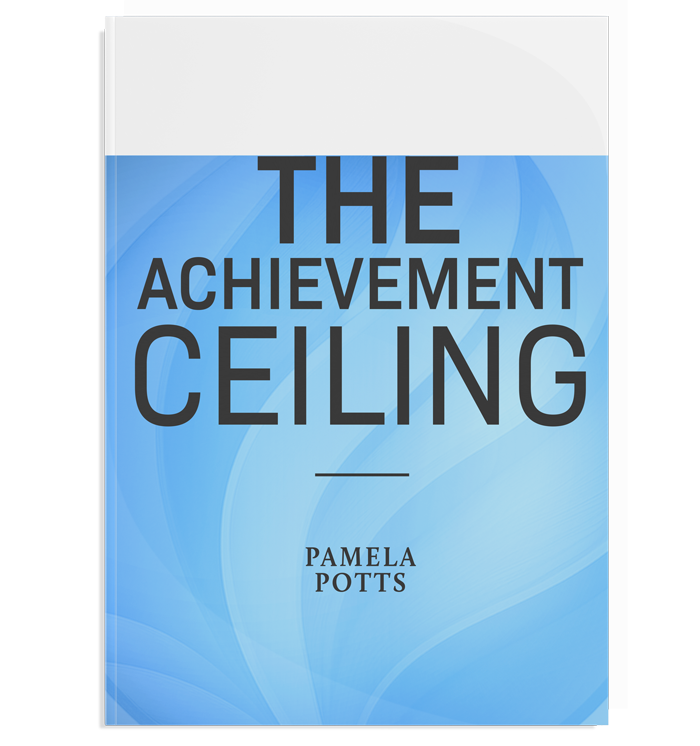
Beyond the Achievement Ceiling is a map for that terrain. Drawing on more than four decades of research by developmental psychologist Susanne Cook-Greuter and the broader field of adult development, this book does something most books in this space do not: it names the specific developmental work that must be done at each stage of growth, not just the stages themselves.
It gives you a map and trusts you to navigate.
WHAT READERS WILL FIND
A clear picture of why the achievement ceiling exists and why conventional effort cannot dissolve it.
A map of the adult developmental stages and what becomes visible at each one.
The specific shifts that must be made to move from one stage to the next.
Practices that stretch without breaking: the inner work that development actually requires.
Recognition that this moment, disorienting as it is, is a sign that something is growing.


Not Sure Where You Are on This Map
Download the self-diagnostic: Have You Hit the Achievement Ceiling?
Before you can do the developmental work, it helps to see the territory you are standing in. This short self-diagnostic draws directly from the book’s framework and is designed to help you locate yourself on the map: what you are likely noticing, what may be holding you in place, and what the terrain ahead might be asking of you.
It is a set of reflective questions for leaders who are already paying attention to their own development and want language for what they are experiencing.
About the Author
Pamela Potts has spent more than two decades working at the intersection of senior leadership and adult development. As a coach, facilitator, and former SVP of People and Culture, she has accompanied leaders through the passages that most leadership development frameworks do not name: the ones that happen not when leaders need new skills, but when the way they have been making sense of their work stops being adequate.
Her introduction to the work of Susanne Cook-Greuter came in 2008 through Georgetown University’s Leadership Coaching Certificate program. She has led an Adult Development Community of Practice for six years, bringing together coaches and practitioners from across North America.
Beyond the Achievement Ceiling is the book she wishes had existed when she first encountered this terrain.
Pamela is based in Victoria, British Columbia, and works with leaders and organizations through Rysa Leadership.


The Map Exists. The Journey Is Yours.
If something in this page has landed with recognition, the self-diagnostic is a useful starting point. It will help you see where you already are.
The book will do the rest.